Type Board Password to Upload a New Sketch
A fantastic feature of any WiFi-enabled microcontroller like ESP32 is the ability to update its firmware wirelessly. This is known as Over-The-Air (OTA) programming.
What is OTA programming in ESP32?
The OTA programming allows updating/uploading a new program to ESP32 using Wi-Fi instead of requiring the user to connect the ESP32 to a computer via USB to perform the update.
OTA functionality is extremely useful in case of no physical admission to the ESP module. It helps reduce the amount of time spent for updating each ESP module at the time of maintenance.
One important feature of OTA is that one cardinal location can send an update to multiple ESPs sharing aforementioned network.
The merely disadvantage is that y'all accept to add an actress code for OTA with every sketch you upload, and then that you lot're able to apply OTA in the next update.
Means To Implement OTA In ESP32
There are 2 ways to implement OTA functionality in ESP32.
- Basic OTA – Over-the-air updates are sent through Arduino IDE.
- Web Updater OTA – Over-the-air updates are sent through a web browser.
Each i has its own advantages. You lot can implement whatsoever one according to your project's requirement.
Below tutorial covers Bones OTA implementation. If y'all want to acquire more about web updater OTA, delight bank check this tutorial out.

3 Simple Steps To Use Basic OTA with ESP32
- Install Python 2.7.x seriesThe outset pace is to install Python 2.7.x series in your computer.
- Upload Bones OTA Firmware SeriallyUpload the sketch containing OTA firmware serially. Information technology's a mandatory step, so that you're able to do the adjacent updates/uploads over-the-air.
- Upload New Sketch Over-The-AirNow, y'all can upload new sketches to the ESP32 from Arduino IDE over-the-air.
Step 1: Install Python 2.7.x series
In order to use OTA functionality, y'all need to install the Python 2.7.10 version, if not already installed on your machine.
Go to Python's official website and download two.7.x (specific release) for Windows (MSI installer)
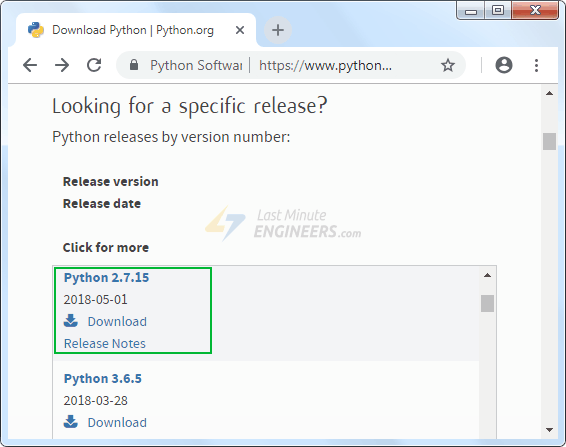
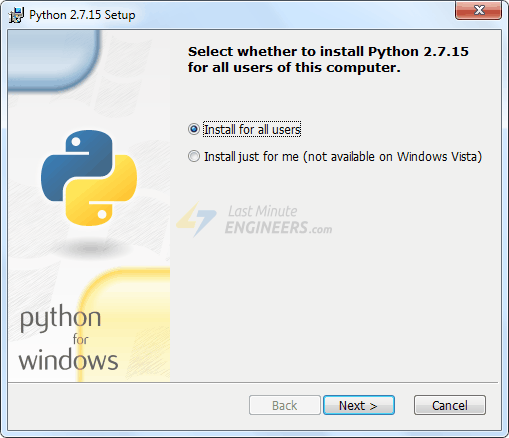
Open up the installer and follow the installation wizard.
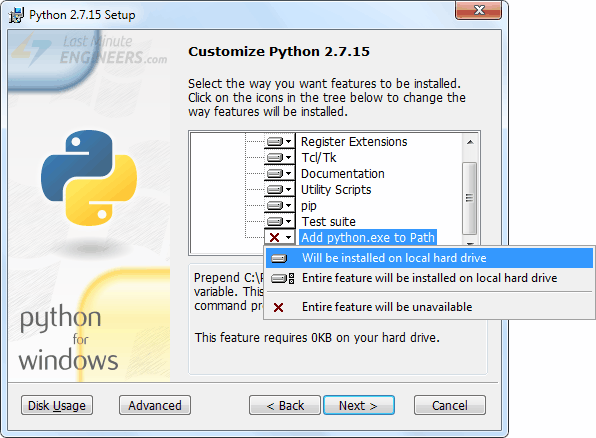
In Customize Python 2.7.X department, make certain the last option Add python.exe to Path is enabled.
Stride 2: Upload OTA Routine Serially
The factory image in ESP32 doesn't have an OTA Upgrade capability. And then, y'all need to load the OTA firmware on the ESP32 through series interface first.
Information technology'southward a mandatory step to initially update the firmware, so that yous're able to do the adjacent updates/uploads over-the-air.
The ESP32 add-on for the Arduino IDE comes with a OTA library & BasicOTA case. You lot can access information technology through File > Examples > ArduinoOTA > BasicOTA.
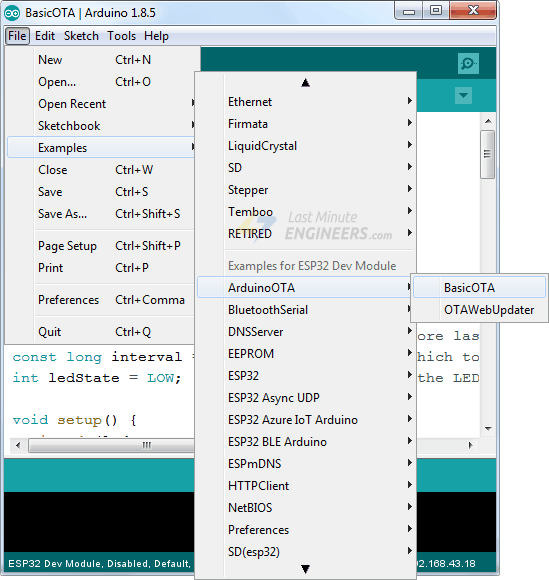
The post-obit code should load. But, before you caput for uploading the sketch, y'all demand to brand some changes to make it work for you. You demand to alter the post-obit two variables with your network credentials, so that ESP32 can constitute a connectedness with existing network.
const char* ssid = ".........."; const char* password = ".........."; One time you are washed, get alee and upload the sketch.
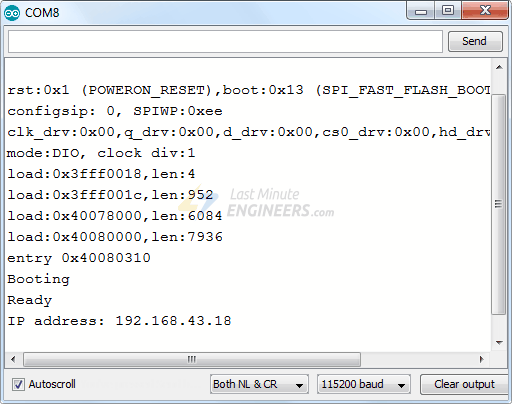
#include <WiFi.h> #include <ESPmDNS.h> #include <WiFiUdp.h> #include <ArduinoOTA.h> const char* ssid = ".........."; const char* password = ".........."; void setup() { Serial.brainstorm(115200); Serial.println("Booting"); WiFi.manner(WIFI_STA); WiFi.begin(ssid, countersign); while (WiFi.waitForConnectResult() != WL_CONNECTED) { Serial.println("Connectedness Failed! Rebooting..."); filibuster(5000); ESP.restart(); } // Port defaults to 3232 // ArduinoOTA.setPort(3232); // Hostname defaults to esp3232-[MAC] // ArduinoOTA.setHostname("myesp32"); // No authentication by default // ArduinoOTA.setPassword("admin"); // Password can exist set with it's md5 value as well // MD5(admin) = 21232f297a57a5a743894a0e4a801fc3 // ArduinoOTA.setPasswordHash("21232f297a57a5a743894a0e4a801fc3"); ArduinoOTA .onStart([]() { Cord type; if (ArduinoOTA.getCommand() == U_FLASH) type = "sketch"; else // U_SPIFFS type = "filesystem"; // NOTE: if updating SPIFFS this would be the identify to unmount SPIFFS using SPIFFS.end() Series.println("Starting time updating " + type); }) .onEnd([]() { Serial.println("\nEnd"); }) .onProgress([](unsigned int progress, unsigned int total) { Serial.printf("Progress: %u%%\r", (progress / (total / 100))); }) .onError([](ota_error_t error) { Serial.printf("Mistake[%u]: ", error); if (error == OTA_AUTH_ERROR) Serial.println("Auth Failed"); else if (fault == OTA_BEGIN_ERROR) Serial.println("Brainstorm Failed"); else if (error == OTA_CONNECT_ERROR) Serial.println("Connect Failed"); else if (mistake == OTA_RECEIVE_ERROR) Series.println("Receive Failed"); else if (fault == OTA_END_ERROR) Serial.println("Finish Failed"); }); ArduinoOTA.begin(); Serial.println("Set up"); Serial.print("IP address: "); Serial.println(WiFi.localIP()); } void loop() { ArduinoOTA.handle(); } Now, open the Serial Monitor at a baud charge per unit of 115200. And press the EN button on ESP32. If everything is OK, it will output the dynamic IP address obtained from your router. Note it down.
Step 3: Upload New Sketch Over-The-Air
At present, allow's upload a new sketch over-the-air.
Remember! you need to add the code for OTA in every sketch you upload. Otherwise, you'll loose OTA capability and will not be able to do next uploads over-the-air. So, it's recommended to modify the above code to include your new lawmaking.
As an example we will include a simple Blink sketch in the Basic OTA code. Remember to modify the SSID and password variables with your network credentials.
Changes in the Basic OTA program are highlighted in Blue.
#include <WiFi.h> #include <ESPmDNS.h> #include <WiFiUdp.h> #include <ArduinoOTA.h> const char* ssid = ".........."; const char* password = ".........."; //variabls for blinking an LED with Millis const int led = ii; // ESP32 Pin to which onboard LED is connected unsigned long previousMillis = 0; // will store last time LED was updated const long interval = 1000; // interval at which to blink (milliseconds) int ledState = LOW; // ledState used to set up the LED void setup() { pinMode(led, OUTPUT); Serial.brainstorm(115200); Serial.println("Booting"); WiFi.mode(WIFI_STA); WiFi.brainstorm(ssid, countersign); while (WiFi.waitForConnectResult() != WL_CONNECTED) { Serial.println("Connection Failed! Rebooting..."); filibuster(5000); ESP.restart(); } // Port defaults to 3232 // ArduinoOTA.setPort(3232); // Hostname defaults to esp3232-[MAC] // ArduinoOTA.setHostname("myesp32"); // No authentication by default // ArduinoOTA.setPassword("admin"); // Password can exist set with it's md5 value as well // MD5(admin) = 21232f297a57a5a743894a0e4a801fc3 // ArduinoOTA.setPasswordHash("21232f297a57a5a743894a0e4a801fc3"); ArduinoOTA .onStart([]() { String blazon; if (ArduinoOTA.getCommand() == U_FLASH) type = "sketch"; else // U_SPIFFS blazon = "filesystem"; // NOTE: if updating SPIFFS this would be the place to unmount SPIFFS using SPIFFS.end() Serial.println("Start updating " + blazon); }) .onEnd([]() { Serial.println("\nEnd"); }) .onProgress([](unsigned int progress, unsigned int total) { Series.printf("Progress: %u%%\r", (progress / (full / 100))); }) .onError([](ota_error_t mistake) { Serial.printf("Error[%u]: ", fault); if (error == OTA_AUTH_ERROR) Serial.println("Auth Failed"); else if (error == OTA_BEGIN_ERROR) Serial.println("Brainstorm Failed"); else if (error == OTA_CONNECT_ERROR) Serial.println("Connect Failed"); else if (error == OTA_RECEIVE_ERROR) Serial.println("Receive Failed"); else if (error == OTA_END_ERROR) Serial.println("End Failed"); }); ArduinoOTA.begin(); Series.println("Set"); Serial.impress("IP address: "); Serial.println(WiFi.localIP()); } void loop() { ArduinoOTA.handle(); //loop to blink without filibuster unsigned long currentMillis = millis(); if (currentMillis - previousMillis >= interval) { // relieve the last time you blinked the LED previousMillis = currentMillis; // if the LED is off plow it on and vice-versa: ledState = not(ledState); // set the LED with the ledState of the variable: digitalWrite(led, ledState); } } In above program, we have not used delay() for blinking an LED, because ESP32 pauses your program during the filibuster(). If adjacent OTA request is generated while Arduino is paused waiting for the delay() to pass, your program will miss that request.
In one case you copy in a higher place sketch to your Arduino IDE, go to Tools > Port option and you should run across something like this: esp32-xxxxxx at your_esp_ip_address If you can't find it, you may need to restart your IDE.
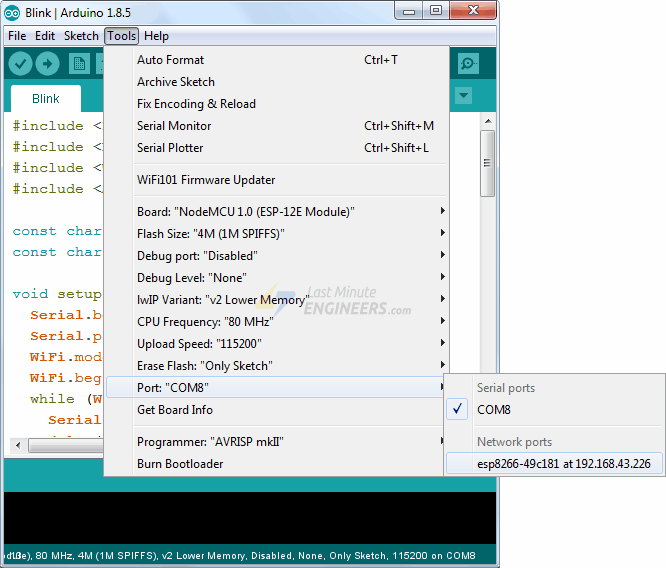
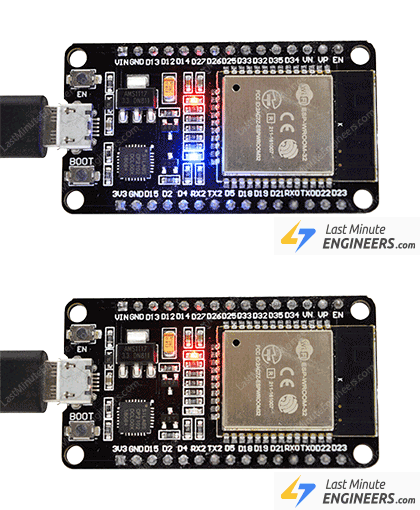
Select the port and click Upload push. Within a few seconds, the new sketch will be uploaded. And you should see the on-lath LED blinking.
perezwhistless1984.blogspot.com
Source: https://lastminuteengineers.com/esp32-ota-updates-arduino-ide/
0 Response to "Type Board Password to Upload a New Sketch"
Post a Comment