Issues With Literacy Center Guided Reading Groups
 Past Regie Routman
No teacher deliberately sets out to disadvantage students and, still, we unintentionally do so all the fourth dimension.
Students do not become cocky-directed, blithesome readers because teachers and administrators prioritize daily, guided reading groups. Students become readers, in every positive sense of that discussion, when most of their reading fourth dimension is dedicated to uninterrupted, voluminous reading of texts they can and want to read.
Guided reading is and always has been a ways to an terminate — readers who beloved to read for pleasance, information, enrichment, life fulfillment, and their own personal goals.
Only when we develop common behavior that align with research-based, principled practices can we finer apply guided reading – or any instructional construct – to benefit all learners. Since a vast majority of students in the U.S. are ability grouped for "guided reading," we need to be articulate on our purposes, principles, and practices.
Expanding our view of guided reading
The commonly held, narrow definition of guided reading relies on meeting with a minor group of students at a similar reading level and guiding them through a manageable text. Consider instead relying on a more expansive view of guided reading:
Guided reading is any learning context in which the teacher guides one or more students through some aspect of the reading process: choosing books, making sense of text, decoding and defining words, reading fluently, monitoring 1'south comprehension, determining the author's purpose, and so on. In guided reading, the teacher builds on students' strengths and supports and demonstrates any is necessary to move the child toward independence. (Routman, Reading Essentials, 2003, p. 151 and Literacy Essentials, 2018)
This broader definition ways, for example, that using a nonfiction text in a content expanse or meeting with a student in a one-on-ane reading briefing can be a guided reading lesson. Go on in mind that guided reading is a temporary scaffold to assist students to become self-regulating, self-reliant readers.
In guided reading students are expected to effort-and-apply with our guidance the solid instructional skills and strategies of practiced readers that we've been explicitly instruction and practicing every mean solar day with them, across the curriculum through multiple contexts — thinking aloud, demonstrations, shared reading, shared writing, and small group piece of work. Very important at this phase, the pupil assumes responsibility for most of the reading work.

From Reading Essentials (Routman, 2003) – Click image to enlarge
Rethinking Guided Reading:
four Crucial Considerations
EQUITY Problems
► Depression-income students are near often placed in the lowest groups and are nigh likely to remain there, limiting their achievement equally readers. (Run into this recent enquiry.) Keeping depression income students in low performing groups belies the belief that all children tin learn and, instead, continues the pernicious poverty of depression expectations that limits and slows students' reading growth, sometimes for their entire school careers.
I have no bug with "ability" grouping early on, mostly in grade 1 and early course 2, merely until students tin can read pretty well on their own — equally long equally the vast majority of daily reading opportunities are inclusive for all students. To attain a positive outcome for every reader, flexible grouping based on learning needs is a necessity, as is ensuring equal access to quality content.
► "Low" reading groups often focus on low-level skills and over rely on levels and labels (by kids, teachers, parents, librarians). Prioritizing skills and word piece of work in isolation is common while education a repertoire of high level thinking tools and engaging with loftier quality literature are rare.
PROFESSIONAL LEARNING Bug
► Overreliance on commercial reading programs shortchanges students and teachers. While we all demand a comprehensive framework for teaching, scripted programs and rigid lesson plans have proven to be detrimental to teaching for deep understanding.
Information technology was my professional, intensive educational training and feel every bit a Reading Recovery teacher that finally made me a competent reading teacher. Until that time, I taught reading most exclusively through decoding and skills in isolation. Reading Recovery moved me beyond the ongoing code-based vs. meaning-based debates to an integrated, personalized arroyo that incorporates explicit instruction in discussion work and comprehension every bit function of reading all texts. Ongoing professional person learning is a necessity for us all!
► Y'all tin't teach reading well if you are not a reader. As an avid reader of fiction and nonfiction, I use multiple strategies interactively in an effort to deeply understand a text. For example, I infer, summarize, figure out meaning from surrounding context and visuals, and link prior knowledge to new learning. I teach what I practise every bit a competent reader – and writer – through demonstrations, thinking aloud, shared reading, shared writing, and much more than. Professional reading – books, manufactures, research, blogs – continue to inform how I think, read, teach, and lead.
 READING Issues
► The focus in guided reading tends to exist on teaching reading, rather than on teaching readers. That is, the instructional focus is often on decontextualized skills and strategies in isolation, which has not been proven to transfer to increased comprehension in reading texts. Also, once students can read fluently, well-nigh all their reading is silent and the instructor is checking for understanding and supporting as needed when meaning breaks down.
► Over relying on a designated reading level for book selection is common. Even when done thoughtfully, leveling books is a subjective process, not a scientific ane. Levels past themselves do not typically have into consideration students' interests, groundwork cognition, and cultural relevance of the texts — all of which touch how easy or difficult information technology volition exist to comprehend a book. A book we think might piece of work well with a group may show to be a poor fit. For perspectives on leveling meet my recent MiddleWeb article.
► Too often the teacher is doing most of the work , often because the selected guided reading book is too difficult and students are unable to read 95% of the words so they tin focus on meaning. If we look again at the Optimal Learning Model in the graphic above, we see that in the guided practice stage, the educatee is at present in charge of the learning process, not the teacher. At this phase, we are generally supporting students and then they can self-monitor, cocky-right, and cocky-direct themselves when they are reading on their ain.
► Sufficient sensitivity to readers who struggle can be lacking. I am not a fan of "walk-to-reading"—with large, power-grouped classrooms—or of whatever groupings which stigmatize students. I believe the knowledgeable classroom teacher needs to assume the main responsibility for guided reading because s/he knows her/his students best—their preferences, interests, needs, background, and goals.
Think about creating more flexible, needs-based groups established on more than levels. As an instance, offering an invitation to whatsoever students who want to larn more about, for case, figuring out multi-syllable words or revising prior knowledge based on new information in the text. Then invite any educatee who has not volunteered, but who y'all know would do good, to join the group. In my feel, that equitable scenario almost ever works beautifully.
MANAGEMENT Bug
► Students are expected to engage in and independently complete various activities , "seat work", and/or piece of work at various "stations" while the teacher is fitting in multiple groups each twenty-four hour period and is not available for guidance. How these assigned tasks increase readers' competence is rarely assessed so is largely unknown. As well, even though it may be unintentional, managing the direction system frequently winds up taking priority over effective teaching and time for reading, not to mention the enormous amount of time teachers spend planning for management. Sometimes, when teachers are non sufficiently knowledgeable, the management organization even becomes the reading curriculum.
This management focus is particularly egregious in kindergarten, where it'due south unrealistic to look five yr olds to work on tasks on their own for extended periods of fourth dimension while the teacher is "getting in" all her groups. More than importantly, nosotros are depriving young children of play and exploration that is necessary for their optimal development.
► Guided reading groups tend to keep too long , about often for 20-30 minutes. Time is tied to purpose. For example, If we encounter guided reading as the supportive consequence, then 10-xv minutes is plenty time to assert, support, and explicitly teach what's nearly needed at this fourth dimension then about of students' reading time is spent on the main event—deliberate, uninterrupted practice time, independently reading to empathise for pleasure and information. Use your guided reading time wisely. Avoid potential time wasters — for example, whisper reading and/or oral reading for middle school students who are readers.
Self-Evaluate and Take Action
Do all you can to ensure your – and your school's and district'southward – current implementation of guided reading aligns with inquiry, principled practices, and common sense and also that applied practices are fair and equitable to all students. Review the bulleted headings in this article, self-evaluate, and accept activeness to ensure we are equipping all students with the loftier level thinking tools they need to become efficient, constructive readers.
Finally, while we might pride ourselves on having excellent guided reading groups, nosotros could still fail in developing students who are engaged, inquisitive, comprehending readers. Until nosotros prioritize daily choice, admission, and sustained fourth dimension to read interesting texts as the mainstay of whatsoever reading program, our students will not become cocky-sustaining, joyful readers.
(For additional, specific suggestions regarding guided reading, see Literacy Essentials: Date, Excellence, and Equity for All Learners. (Routman, 2018, pp. 219-222.)
______________________________________________
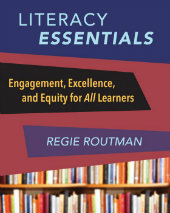 Regie Routman, author of the 2022 Stenhouse book,Literacy Essentials: Appointment, Excellence, and Equity for All Learners, is a mentor teacher, bus, and writer who works side by side with teachers and principals in diverse schools and districts. For more than information about her work and her many books and resources, see www.regieroutman.org.
perezwhistless1984.blogspot.com
Source: https://www.middleweb.com/38836/rethinking-guided-reading/
0 Response to "Issues With Literacy Center Guided Reading Groups"
Post a Comment